

A slab leak can be one of the most difficult plumbing problems for Palo Alto homeowners to recognize because the damaged pipe may be hidden beneath a concrete foundation. Instead of seeing water dripping from a faucet or pipe, homeowners may notice a sudden increase in their water bill, a warm area on the floor, unexplained dampness, or the sound of water running when every fixture is turned off.
Palo Alto’s mix of established homes and properties with aging plumbing systems makes hidden leaks a concern that should not be ignored. A leak beneath the foundation can continue releasing water long before obvious damage appears.
Professional leak detection provides a more precise way to locate the problem. Plumbing Company Palo Alto’s leak detection service uses acoustic and thermal technology to identify hidden leaks while minimizing unnecessary damage to floors, walls, and other finished surfaces.
What Is a Slab Leak?
A slab leak occurs when a water line beneath or within a home’s concrete foundation develops a leak. Because the plumbing is concealed, determining the exact location can be difficult without specialized equipment.
Water escaping beneath the slab does not always travel straight upward. It can move through surrounding materials before eventually producing a visible symptom somewhere else.
That means the wettest or warmest spot in a home may not necessarily be directly above the damaged section of pipe.
Common Warning Signs
Palo Alto homeowners should pay attention to several potential indicators:
- An unexplained increase in the water bill
- Hearing running water when all fixtures are off
- Warm spots on a normally cool slab floor
- Damp or discolored flooring
- Musty odors
- Bubbling paint or moisture around nearby walls
- A water meter that continues moving when water is not being used
- Changes in water pressure
These signs do not automatically prove that a slab leak exists. However, they are strong reasons to have a professional investigate the plumbing system.
According to the provided service information, acoustic listening equipment and thermal imaging can help distinguish a hidden plumbing leak from other possible sources of moisture.
A Palo Alto Homeowner’s Slab Leak Problem
Consider a Palo Alto homeowner who notices that the household water bill has increased even though the family’s daily water use has not changed.
At first, there is no obvious leak. The faucets are dry, the toilets appear to work normally, and there is no visible water damage.
A few days later, the homeowner notices a warm patch on the floor. They also hear a faint sound resembling running water when the plumbing fixtures are turned off.
Instead of breaking into the floor to search for the source, the homeowner calls a professional plumbing company for leak detection.
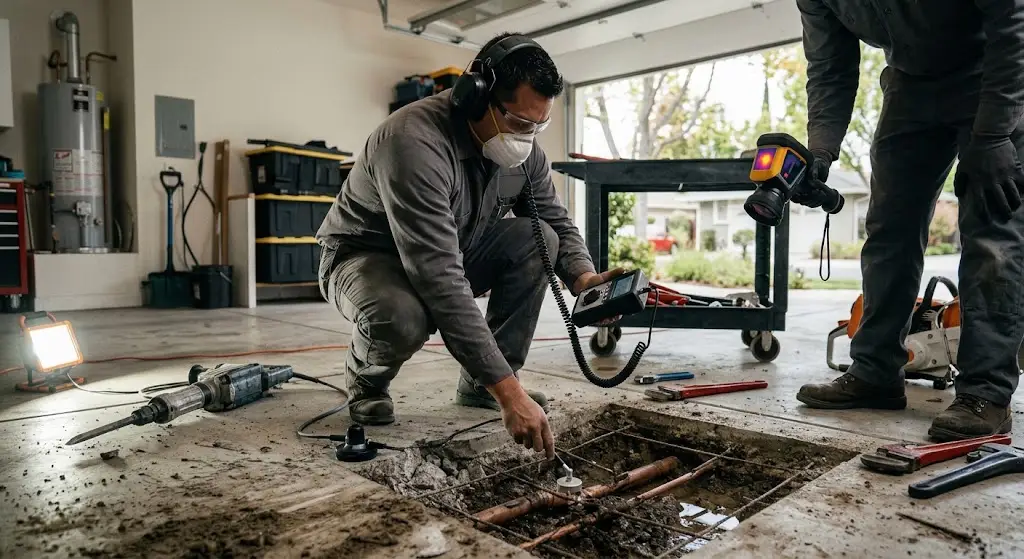
The technician uses acoustic listening equipment to identify the sound of escaping water and thermal imaging to identify temperature changes around the slab. These tools narrow the suspected leak to a specific area without requiring widespread demolition.
Once the leak is located, the plumber can determine the appropriate repair strategy and provide a quote based on the actual problem.
This approach can save the homeowner from turning a hidden plumbing issue into a much larger flooring and concrete-repair project.
Why Professional Slab Leak Detection Matters
Finding a leak beneath concrete is not the same as finding a leaking faucet.
The pipe cannot simply be viewed and inspected from above. A professional needs to determine where water is escaping and where the plumbing line is located before deciding how to access it.
Acoustic Detection
Acoustic equipment can detect the sound produced by escaping water inside concealed plumbing.
Instead of relying on where moisture happens to appear, the technician can use the sound pattern to narrow the suspected location.
This is particularly valuable when water has traveled beneath flooring before becoming visible.
Thermal Imaging
Thermal imaging can identify temperature variations associated with leaking water, particularly when the leak involves a hot-water line.
A thermal camera allows technicians to examine temperature patterns across the floor without immediately removing flooring or concrete.
The provided service information specifically identifies acoustic listening and thermal imaging as tools used to pinpoint slab leaks while avoiding unnecessary demolition.
Targeted Investigation
Once professional equipment narrows the leak to a specific area, any necessary opening can be much more targeted.
That is very different from randomly breaking through a floor and hoping the damaged pipe is underneath.
Why Guess-and-Dig Is the Wrong Approach
A hidden leak creates a temptation to start removing flooring or concrete in the area where the problem seems most obvious.
That can quickly become expensive.
Guessing at the location may lead to:
- Unnecessary concrete removal
- Damaged flooring
- Additional restoration work
- Missed sections of leaking pipe
- Longer repair times
- Higher overall project costs
Professional leak detection is designed to reduce this uncertainty.
The provided service information contrasts traditional “guess and dig” methods with professional acoustic and thermal detection, emphasizing that specialized equipment can narrow the leak location before any digging occurs.
For Palo Alto homeowners, this matters because the plumbing repair itself may be only part of the expense. Unnecessary demolition can turn a plumbing problem into a flooring, drywall, or restoration problem.
What Happens During Professional Slab Leak Detection?
A professional inspection generally begins by gathering information about the symptoms.
The plumber may ask when the water bill increased, whether the homeowner hears running water, whether specific areas of the floor feel warm, and whether any moisture or odors have appeared.
The technician can then inspect the plumbing system and use specialized detection equipment.
Step 1: Identify the Symptoms
The technician evaluates the visible and audible warning signs and determines which areas require closer examination.
Step 2: Use Non-Invasive Detection
Acoustic equipment and thermal imaging help narrow the location without immediately opening the floor.
Step 3: Pinpoint the Leak
The objective is to isolate the problem to a specific work area rather than simply identifying the general part of the home where water may be present.
Step 4: Determine the Repair
Once the source is confirmed, the plumber can explain the repair options and provide a quote based on the actual issue.
The provided service page describes this process as non-invasive detection followed by pinpointing the leak and providing a flat-rate quote before repair.
Why Palo Alto Homeowners Should Act Early
A hidden water leak does not necessarily remain the same size.
Water can continue escaping while the homeowner is unaware of the source. Over time, persistent moisture can contribute to damage involving flooring, walls, or surrounding building materials.
An unexplained water bill increase is therefore more than an inconvenience.
It may be an early warning that water is being consumed somewhere it should not be.
Professional leak detection can help identify the source before the problem becomes a much larger restoration project. The provided company information notes that early detection can prevent unnecessary damage and that hidden leaks may lead to water damage, mold, and increased water costs when left unresolved.
Why DIY Slab Leak Repair Is Not Recommended
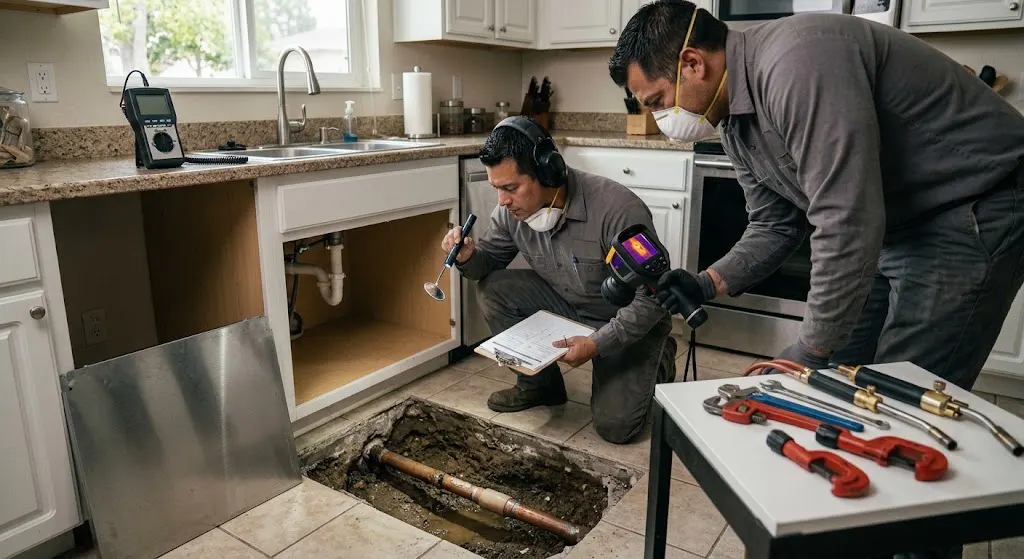
A slab leak is not an appropriate DIY plumbing project.
The damaged pipe is concealed, the exact leak location may be uncertain, and accessing the plumbing can involve concrete and finished flooring.
Without professional equipment, a homeowner may spend hours looking in the wrong location or create unnecessary property damage before reaching the actual pipe.
A professional plumber brings specialized detection equipment, plumbing knowledge, and experience diagnosing concealed leaks.
More importantly, professional detection separates the process of locating the leak from the process of repairing it. That reduces the risk of damaging a large section of the property simply to find the source.
FAQs About Slab Leaks in Palo Alto
What is the most common sign of a slab leak?
An unexplained increase in water usage or a water bill is one common warning sign. Warm floor areas, running-water sounds, and unexplained dampness can also indicate a hidden leak.
Can a slab leak be detected without breaking the floor?
In many cases, yes. Professional acoustic and thermal equipment can narrow the location of a concealed leak before any necessary opening is made.
Is a warm spot on the floor always a slab leak?
No. A warm area can have other explanations. However, an unexplained warm spot combined with other plumbing symptoms deserves professional investigation.
How does a plumber find a leak under concrete?
Professionals can use acoustic listening equipment, thermal imaging, pressure testing, and other diagnostic methods depending on the plumbing system and suspected leak.
Should I wait for visible water damage?
No. Waiting for obvious damage can allow a hidden leak to continue wasting water and potentially damaging surrounding materials. Early professional detection is generally the better approach.
Stop a Palo Alto Slab Leak Before It Spreads
A slab leak can remain hidden beneath your Palo Alto home’s foundation while steadily wasting water and potentially damaging surrounding materials. The sooner the source is accurately located, the sooner you can determine the appropriate repair.
Handy Bay Plumbing provides professional leak detection using acoustic and thermal equipment to locate slab leaks and other concealed plumbing problems. The company states that it serves Palo Alto and the surrounding Peninsula, with licensed and insured technicians and same-day appointments available for most calls.
If you notice a sudden water-bill increase, hear unexplained running water, or discover a warm or damp area on your floor, call Handy Bay Plumbing at (650) 390-5947 to request professional leak detection and a clear repair estimate.