

Homeowners in Redwood City, California, may not realize that a plumbing leak is developing beneath their home’s concrete foundation until they notice an unexplained increase in their water bill, a warm patch on the floor, or moisture near a wall. Many Peninsula homes have concrete slab foundations, and properties with aging plumbing can be especially vulnerable to hidden pipe leaks. Because water can escape beneath flooring without immediately appearing on the surface, identifying Slab Leaks early is essential for limiting water waste and potential property damage.
A slab leak occurs when a water supply pipe beneath a concrete foundation develops a crack, pinhole, or other failure. The escaping water may travel through soil or along building materials before becoming visible, making the original source difficult to identify. Left unresolved, a leak can damage flooring, encourage mold growth, and potentially affect the soil supporting the foundation.
Handy Bay Plumbing provides professional leak detection services in Redwood City and surrounding Peninsula communities, including slab leak detection using acoustic and thermal equipment. Its approach focuses on locating the source before unnecessary demolition begins, helping homeowners understand the problem and the appropriate repair options.
What Causes Slab Leaks in Redwood City Homes?
Slab leaks commonly develop when water pipes beneath a home’s foundation deteriorate or become damaged. The cause can vary depending on the pipe material, installation quality, age of the plumbing system, and surrounding conditions.
Older homes may have copper supply lines beneath the concrete. Over time, corrosion, abrasion, or contact with surrounding materials can contribute to pinhole leaks. Poor installation, excessive water pressure, and movement that places stress on pipes can also contribute to plumbing failures.
Redwood City’s established residential neighborhoods include properties with older plumbing systems, making it important to investigate unexplained water loss rather than assuming a higher utility bill is simply the result of increased household use.
Soil movement and moisture changes can affect buried plumbing and the surrounding structure, but they do not automatically mean a slab leak is present. A professional inspection helps distinguish a leaking supply pipe from other possible sources, including irrigation systems, fixtures, and drainage problems.
Warning Signs of a Slab Leak
Slab leaks often develop out of sight, but several warning signs may indicate that water is escaping beneath your home.
Unexplained Increases in Your Water Bill
A sudden rise in water consumption without a corresponding change in household habits is one of the clearest reasons to investigate a hidden leak. A damaged supply line can continue losing water even when nobody is using a faucet or shower.
If the increase persists, a professional leak detection inspection can help determine whether the problem originates beneath the slab or somewhere else in the plumbing system.
Warm or Damp Spots on the Floor
A hot-water pipe leaking beneath a concrete slab can create an unusually warm area on the floor. Other leaks may cause damp flooring, discoloration, or moisture near baseboards.
These symptoms do not prove that a slab leak exists. Water from another plumbing source or moisture intrusion can produce similar signs, which is why accurate diagnosis matters.
Cracks in Flooring or Walls
Persistent moisture can affect some building materials and may contribute to changes in the surrounding soil. In certain circumstances, foundation movement can be associated with cracks in flooring or walls.
However, cracks have many possible causes. A plumber can investigate the suspected leak, while a qualified structural professional may be needed if there are signs of significant foundation movement.
The Sound of Running Water
If you hear water running when all faucets, appliances, and other water-using fixtures are switched off, a hidden plumbing leak may be responsible.
The sound may originate from a pipe inside a wall, beneath a floor, or elsewhere in the plumbing system. Professional detection helps identify its source without relying on guesswork.
Musty Odors or Persistent Moisture
Water trapped beneath flooring or near walls can create damp conditions that encourage mold and mildew. If a musty smell persists without an obvious explanation, investigate the moisture source instead of simply covering the odor.

How Professionals Detect Slab Leaks Without Unnecessary Demolition
Finding a leak beneath concrete requires more than a visual inspection. Breaking into the slab before confirming the source can damage flooring, increase restoration work, and still fail to expose the affected pipe.
Handy Bay Plumbing uses non-invasive detection methods to narrow down the location of hidden plumbing leaks before repair work begins.
Acoustic Leak Detection
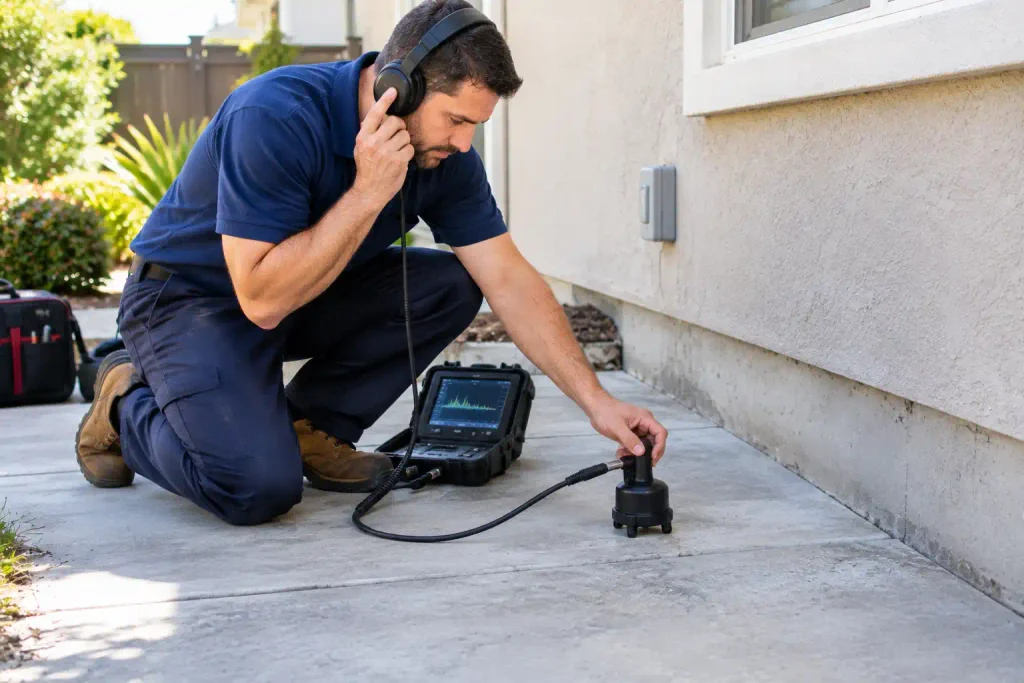
When water escapes from a pressurized pipe, it can create sound and vibration. Specialized acoustic equipment allows technicians to listen for these signals and compare them across different locations.
By interpreting the sounds, a trained technician can narrow down where the leak is likely occurring. Acoustic detection is useful for locating concealed leaks, although results can vary with pipe material, leak size, background noise, and site conditions.
Thermal Imaging
Thermal imaging cameras detect temperature differences across surfaces. When a hot-water line leaks beneath a slab, the escaping water may create a temperature pattern that differs from the surrounding floor.
Thermal imaging can help identify areas that need closer investigation, but it does not independently confirm every leak. Technicians interpret thermal patterns alongside other findings to avoid confusing a plumbing problem with unrelated temperature changes.
Pressure Testing
Pressure testing may help determine whether a water supply line is losing pressure. A technician can isolate appropriate sections of the plumbing system and assess whether the results indicate a leak.
This method can help confirm that a plumbing circuit requires further investigation. It must be performed correctly, using suitable procedures for the pipe system being tested.
Why Professional Slab Leak Detection Matters
Trying to locate a slab leak without specialized equipment often leads to trial and error. A homeowner may notice a damp patch or hear running water but cannot reliably determine which pipe is affected or where the leak begins.
Professional leak detection combines technical equipment with plumbing knowledge to narrow down the source before opening floors or concrete. This targeted approach can reduce unnecessary demolition and help repair work focus on the affected area.
A professional can also distinguish a suspected supply-line leak from other issues that require different services. For example, a broken sewer lateral may require sewer inspection and repair rather than a water supply line repair.
After locating the problem, the plumber can explain the findings, provide a repair estimate, and discuss suitable options. Depending on the pipe condition and location, the solution may involve a targeted pipe repair, rerouting a line, or replacing a larger section of deteriorated plumbing.
The correct option depends on the pipe’s condition, accessibility, and the extent of the damage. No single repair method is appropriate for every slab leak.
A Redwood City Homeowner Scenario
Consider a homeowner in Redwood City who notices that their water bill has increased for two consecutive months. There are no dripping faucets, visible puddles, or obvious plumbing problems, but one section of the floor feels warmer than the surrounding area.
Rather than removing the flooring to search for a pipe, the homeowner contacts Handy Bay Plumbing for professional leak detection.
A technician investigates the plumbing system using acoustic equipment and thermal imaging. The results help narrow down the suspected leak location and determine which section requires further assessment. Once the source is identified, the homeowner receives an explanation of the findings and a quote for the appropriate repair.
This is an illustrative scenario, not a verified customer case. It demonstrates how professional detection can help avoid unnecessary exploratory demolition and provide a clearer path toward repair.

What to Do If You Suspect a Slab Leak
If you notice several warning signs, arrange a professional inspection promptly. You can take a few sensible steps while waiting for assistance.
- Check your water bill for unexplained increases.
- Turn off water-using fixtures and appliances, then observe whether your water meter continues registering usage, if it is safe and practical to do so.
- Record the location of warm spots, damp areas, or other unusual changes.
- Avoid breaking into concrete or removing extensive flooring to search for the pipe yourself.
- If water is actively spreading, shut off the main water supply if you can do so safely and contact a plumber.
If moisture is near electrical equipment or outlets, avoid the affected area and seek qualified assistance. If you suspect substantial structural movement, have the property assessed by an appropriate structural professional as well.
Frequently Asked Questions About Slab Leaks
Can a slab leak go unnoticed for months?
Yes. A leak beneath concrete may remain hidden until water usage increases or moisture begins affecting flooring and walls. The time it takes to become noticeable depends on the leak’s size, location, and surrounding conditions.
Can slab leaks be detected without breaking concrete?
In many cases, professional acoustic and thermal tools can narrow down a suspected leak without immediately opening the slab. Some situations require additional testing or a targeted opening to confirm the source and complete the repair.
Are warm floors always a sign of slab leaks?
No. Warm flooring can result from sunlight, heating systems, hot-water pipes, or other factors. An unexplained warm area combined with other plumbing symptoms warrants further investigation.
Does every slab leak require foundation excavation?
No. Repair methods depend on the leak’s location, pipe condition, accessibility, and overall plumbing layout. A professional assessment can determine whether a targeted repair, rerouting, or another solution is appropriate.
How quickly should I address a suspected slab leak?
Arrange an inspection as soon as reasonably possible, particularly if you notice continuous water loss, spreading moisture, or rapidly increasing bills. Prompt investigation helps limit ongoing water waste and reduces the risk of additional damage.
Protect Your Home With Professional Slab Leak Detection
Slab leaks can be difficult to identify because the damaged pipe sits beneath the concrete foundation. Recognizing warning signs such as unexplained water bills, warm flooring, persistent moisture, and running-water sounds can help you respond before the problem worsens.
Handy Bay Plumbing provides leak detection services for Redwood City, Palo Alto, and surrounding Peninsula communities. Its technicians use acoustic and thermal detection methods to locate hidden plumbing leaks, explain the findings, and recommend an appropriate next step.
If you suspect a leak beneath your home’s foundation, visit Handy Bay Plumbing’s leak detection service page or call (650) 390-5947 to request an estimate. Professional detection can help you identify the source and make informed decisions about protecting your property.